

Stolen Children is the first book in the series History with a Southern Accent, a multi-generational family saga.
In 1611, ten-year-old Cecily is snatched from her London home and forced aboard the Swan as stolen cargo. Indentured to the Pierce family in Jamestown and trusting no one, she has only one goal: survival. She learns to read by observing the Pierce child, grasping knowledge as her sole possession. Yet a secret friendship with Matoaka, known to history as Pocahontas, upends all she has been taught. Matoaka’s self-determination, even while held hostage, inspires Cecily to seek control of her own fate. She carries that resolve into a forced marriage at fifteen. But when Cecily is left a widowed teenage mother, alone in the wilderness, she must learn to trust others to save herself and her child.
In 1754, Amina’s tenth birthday ends not with celebration, but with capture. Burdened by remorse for leading her captor to her cousin Nala, she survives a harrowing journey on the Hare—along the African coast, across to Barbados, then on to Charleston—by focusing on Nala. Auctioned in a “refuse parcel” to the Pierce rice plantation, the Pierces strip her of her cousin and even her identity, renaming her Cordelia. Missus Pierce, with cruel irony, renames and treats the enslaved as players in her own Shakespearean dramas, while forbidding literacy. Delia, as she is now called, seeks meaning in life by caring for others, yet when she discovers an opportunity to learn to read, she finally desires something for herself. As she forges bonds of literacy and love with the young blacksmith, Delia must decide if freedom of mind, if not body, is worth the risk of the overseer’s lash—or her life.
Both girls are bound by the legacy of the Pierce family. In a haunting intersection, a young Cecily encounters Angelo—one of the first Africans in English America—and senses that the very nation offering her autonomy is already constructing the cage that will hold Delia fast a century later.
The saga continues…
From the shipwreck that inspired Shakespeare’s The Tempest to the coordinated attacks of 1622 that nearly destroyed the Virginia Colony, the Stolen Children/Stolen Lives saga follows two lineages through the crucible of early America. As Cecily rises from a ‘spirited away’ orphan to a woman of prominence, and Delia faces the brutal choice between the safety of the forge and the deadly risk of escape, the series explores a system built to determine whose stolen childhood can be redeemed—and whose cannot.
Stolen Children is the first book in the History with a Southern Accent series. The second book, Stolen Lives, complete at 89,000 words, continues the dual-timeline stories of Stolen Children.
The third book of the History with a Southern Accent series follows Kathryn, another stolen child, during Bacon’s Rebellion.
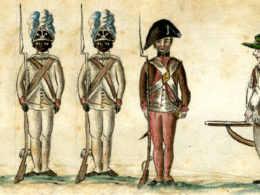
The fourth book brings all the families together and takes place during the American Revolution, exploring the paradox of a nation fighting for “liberty” while further entrenching the institution of slavery.
———
A Note on Angelo and William Shakespeare
One of the few Africans listed in the 1624 Virginia muster by name was Angelo. She arrived in Virginia aboard the Treasurer in 1619 and was included in the muster of William Pierce’s household in 1624.
William Pierce (along with Samuel Jordan, John Rolfe, and other colonial leaders) survived the shipwreck of the Sea Venture in 1609. Their fellow passenger, William Strachey, wrote a report on the shipwreck that inspired his friend, William Shakespeare, to write The Tempest.
It is unknown whether William Pierce renamed Angelo or if her Portuguese captors did. Since she was twice stolen, first from Africa and then from the Portuguese ship, it seems plausible that Pierce named her rather than that she herself relayed a name thrust on her. The name Angelo is in both Comedy of Errors and Measure for Measure, and Pierce had a personal connection to Shakespeare’s Tempest through the Sea Venture shipwreck.
Those historical details inspired me to have William and Joan Pierce’s fictional descendant, Elias Pierce, and his wife enjoy naming and manipulating people to suit their Shakespearean namesakes. Two of my favorite characters in Stolen Children are Prospero and Caliban. Both their stories develop in Stolen Lives.
Factual Notes
When ten-year-old Cecily was taken, she did not consider herself kidnapped, nor did the other children sent to the Virginia colony as bound labor in the early 1600s. Language can shape perception. The word kidnap was coined sixty years after Cecily was taken, defining the act as stealing children to provide servants and laborers for the American colonies. Before the term existed, society lacked the language to consider these actions illegal, which facilitated their acceptance. This normalization of child trafficking to English America laid the groundwork for the broader trade in stolen children—and adults—that began in 1619, eight years after Cecily’s arrival, and continued to and beyond Amina being taken, over a century later.
Cecily may have been the first child kidnapped from England, but she was joined by another hundred in 1618, as described briefly in https://en.wikipedia.org/wiki/Home_Children
The Virginia colony was the first “recipient” of these stolen children, followed by other American colonies. The trafficking of English children to America declined with the increase in stolen Africans and ended with the American Revolution. However, “unaccompanied child migration” as a British policy lasted centuries, ending only 50 years ago. The trade to America was followed by shipments to Canada, South Africa, the Caribbean, Australia, and New Zealand.
https://www.tandfonline.com/doi/full/10.1080/14733285.2021.1992348#abstract
The trafficking of millions of humans from the African continent was far more extensive and devastating. Those atrocities began by 1444, when Portuguese ships took captured Africans to the island of Madeira to grow sugar cane. In 1526, Portuguese mariners took enslaved Africans to Brazil, establishing the trans-Atlantic slave trade.
Delia is transported on the Hare to ports along the African coast, then across the Middle Passage to Barbados for weeks, then held on Sullivan’s Island before being auctioned in Charleston. This route mirrors the Hare’s historical journey in 1754/55. While shackled in the hold of the ship, Delia learns that most of the slave ships go to the Caribbean or further south. From 1501 to 1830,
388,000 captured and enslaved Africans were shipped to North America,
4,000,000 of the same were sent to the Caribbean (mostly Cuba and Haiti), and
5,000,000 were sent to Brazil.
In 1830, there were estimated to be 2.3 million Black people in North America, and 2.4 million Black people in the Caribbean. The North American population had increased to about 600 percent of those sent, while the Caribbean population was reduced to only 60 percent of those sent. The survival and reproductive success rates were approximately 10 times higher in North America than in the Caribbean.
(Source and many more details are on the website at
https://www.karenkaler.com/blog/before-and-after-1619/ )
Author’s Note
The historical record of Cecily Jordan Farrar’s life is more extensive than that of most women of her era, partly because of her involvement in the first breach-of-promise lawsuit in the American colonies, and the intriguing detail that a spurned man was suing a woman. Nearly all the characters in the Virginia narrative are based on real people documented in historical records. Among those people are some of my ancestors.
Few of the people kidnapped from Africa and brought to North America were able to leave traces of their existence for their descendants. Delia’s story is loosely based on the life of Priscilla, as documented in Elias Ball’s plantation records, and uncovered by Ball’s descendant Edward Ball. Priscilla survived a harrowing voyage on the Hare, and Sean M. Kelley uncovered that ship’s unusually detailed records. I am deeply indebted to Edward Ball’s research and book Slaves in the Family and Sean M. Kelley’s research and book The Voyage of the Slave Ship Hare.
Among many books of early American history I read for the Virginia story, I am particularly indebted to a collection of primary source documents titled Jamestown Narratives: Eyewitness Accounts of the Virginia Colony, the First Decade, 1607-1617; John Dorman’s Adventurers of Purse and Person, Virginia, 1607-1624/5; James Horn’s A Land as God Made It: Jamestown and the Birth of America; Daniel Blake Smith and Lorri Glover’s The Shipwreck That Saved Jamestown; Cameron Colby’s Jamestown 1622; and Jennifer Potter’s The Jamestown Brides.